


Our Brands

The Core of Our Business

ADvTECH remains Africa's leading private education provider and our commitment to academic excellence is at the core of our strategy and is fundamental to ADvTECH’s success. 

Create exciting campaigns that attract attention

Benchmarking our performance

Learning and other analytics

International and employer recognition

News Desk
By Tamara Thomas January 21, 2026
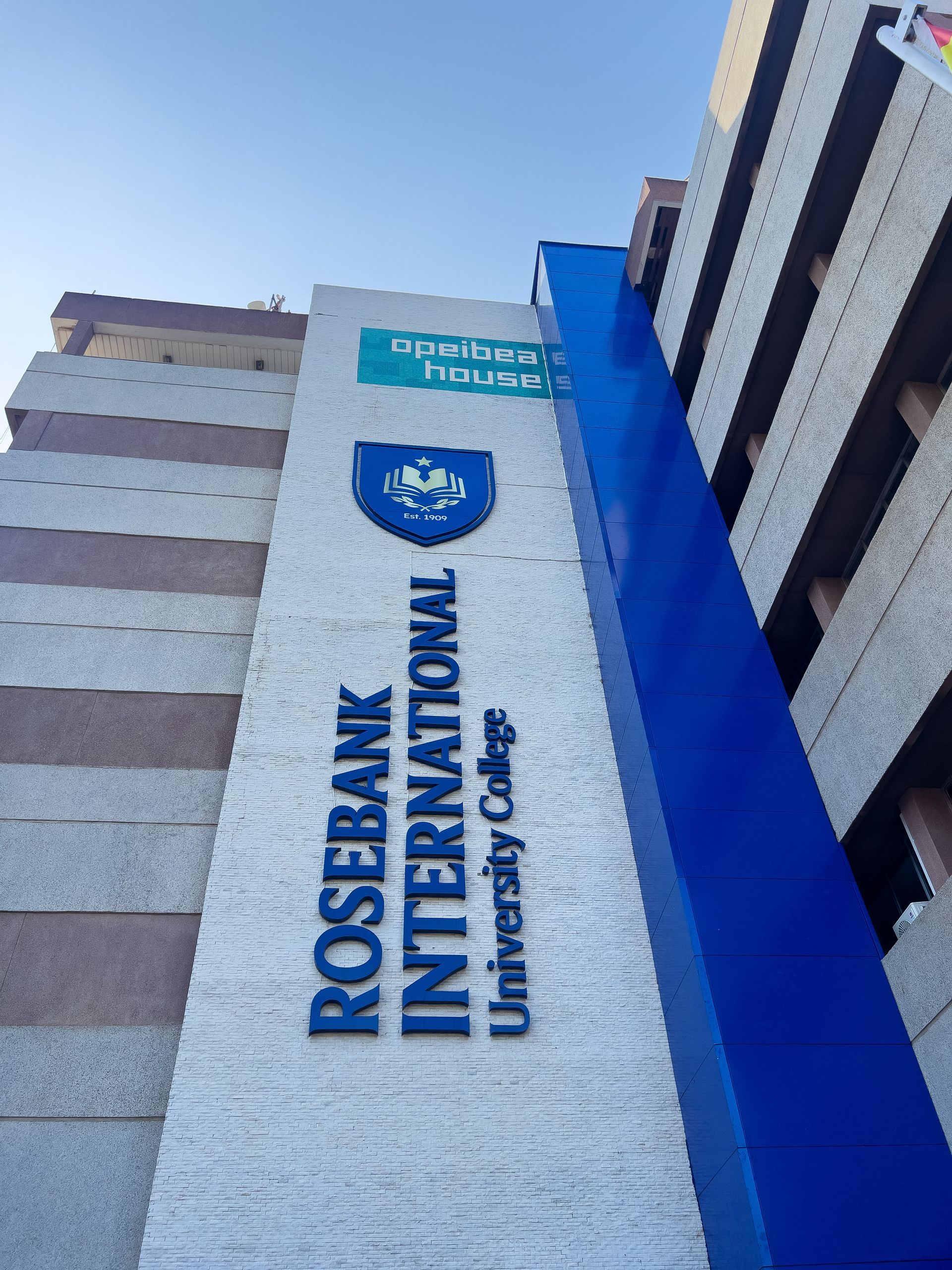
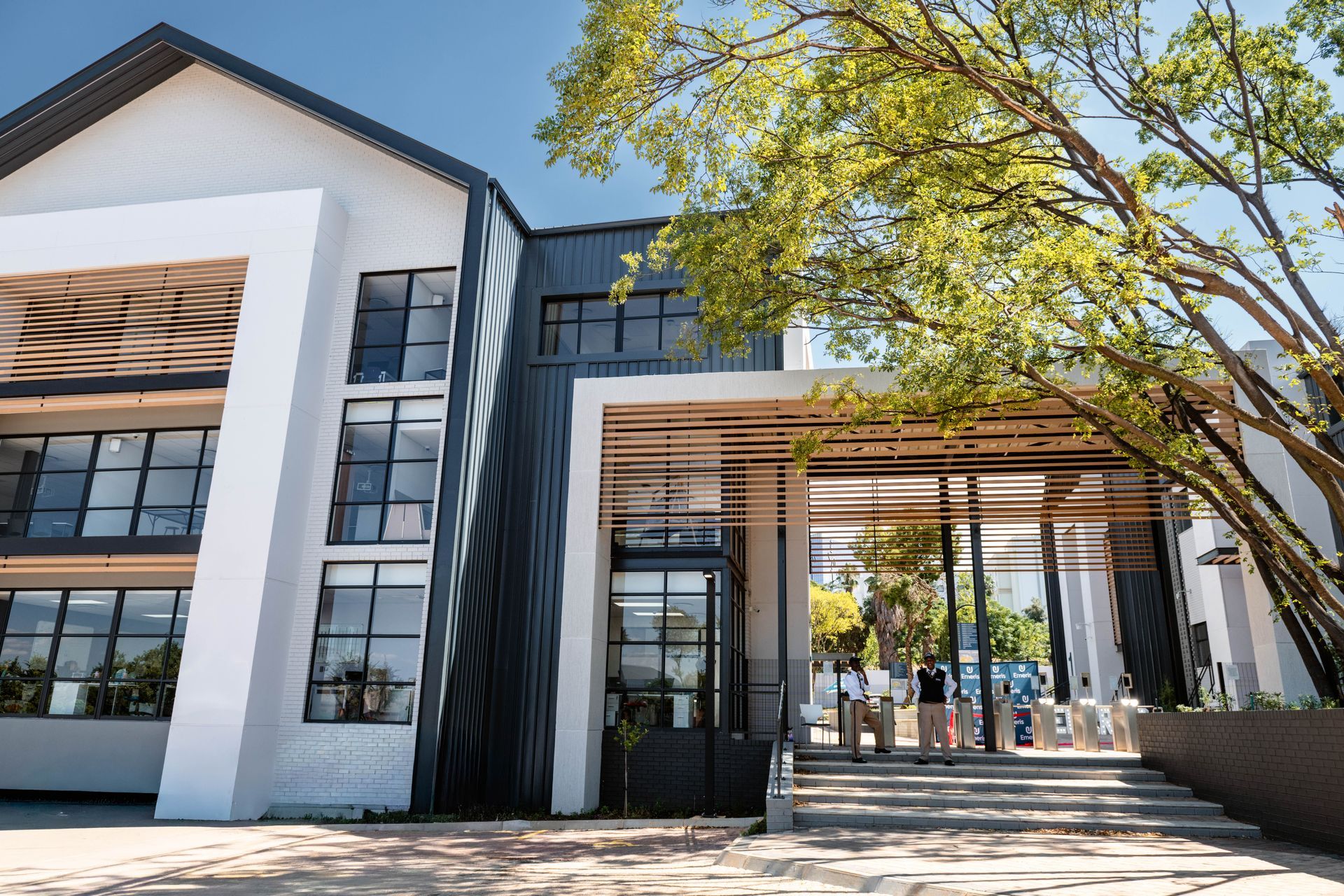
Rosebank International University College (RIUC), the groundbreaking institution launched last year by Africa’s leading private education provider, the ADvTECH Group, today proudly welcomed its inaugural cohort of students. Hundreds of exceptional first-time students, carefully selected from an overwhelming pool of more than one thousand highly competitive applications, have now officially commenced their transformative academic journey at RIUC . This select cohort now embarks on an unparalleled opportunity – one that will equip them with the advanced skills, cutting-edge knowledge, and innovative mindset essential to meet the evolving demands of the global workforce in the Fourth Industrial Revolution and beyond. Dr Linda Meyer, President of Rosebank International University College, and MD at The IIE’s Rosebank College and Waterfall School of Business (WSB), said: “Today marks an historic step as we welcome our pioneering inaugural cohort.” “Backed by ADvTECH’s pan-African vision, our accreditations, global partnerships, and GETFund support, RIUC is delivering inclusive, innovative education that prepares students for success in the Fourth Industrial Revolution and beyond, while rooting excellence in African leadership.” “As they step onto the modern campus in Accra for the start of the 2026 academic year, these pioneering students are not only beginning their higher education, but also contributing to a significant milestone in Ghana’s tertiary landscape.” “They are positioned to become future leaders, innovators, and global professionals who will drive meaningful progress both locally and internationally,” she added. RIUC offers accredited programmes across its faculties, including high-demand qualifications such as: Bachelor of Computer and Information Sciences Bachelor of Commerce in Supply Chain Management Bachelor of Hospitality Management Bachelor of Computer and Information Sciences in Application Development Bachelor of Information Technology in Business Systems Bachelor of Commerce in Digital Retail Entrepreneurship RIUC is truly positioned as a hub for global learning, boasting partnerships with: Ghana Tertiary Education Commission (GTEC) Capsicum Culinary Studio (endorsing culinary programs with global industry ties) Association of African Universities Golden Key International Honour Society (global network for high-achieving scholars) ADvTECH and Rosebank College South Africa “Our new students can look forward to international exchange programmes, immersive study abroad opportunities, and access to globally recognized qualifications,” Dr Meyer says.  With limited remaining space, prospective students for 2026 and beyond are encouraged to register immediately—online at www.riuc.edu.gh/application—registration or by visiting the campus.
January 21, 2026
Pinnacle College Kyalami is a school intentionally designed for their community, one in which adaptability, digital fluency and human skills matter as much as academic knowledge. Its educational model blends strong academic foundations with innovation, personalisation and holistic development to prepare learners for futures that are still unfolding. A defining feature of the school is the purposeful integration of technology into everyday learning . Classrooms are equipped with modern digital tools that support interactive, blended and inquiry-based learning. From Grade 0, students are introduced to coding, robotics and computational thinking , helping them develop problem-solving skills, logical reasoning and creative confidence with technology, not as an add-on, but as part of the learning culture. In Grades 4 to 6, mathematics is supported by ADvLEARN , an AI-enhanced approach to learning that enables teachers to track learner progress with greater precision and tailor targeted support or extension to individual needs. This is further strengthened by the school’s Individual Education Plan (IEP) framework, ensuring that each learner’s academic, emotional and developmental needs are understood and supported in a structured, intentional way. Pinnacle College Kyalami also offers a boarding environment for up to 100 learners , providing a secure, nurturing and structured setting that extends learning beyond the classroom. Boarding supports independence, leadership and social development, while offering families a balanced blend of care, routine and opportunity. The campus itself is designed as a “playground for the future” , a space where curiosity is encouraged, collaboration is natural and learning is active. Through project-based work, interdisciplinary thinking and experiential opportunities, learners are supported to engage deeply, think critically and apply knowledge meaningfully.  Together, these elements create a learning environment that is not only academically sound, but future-focused by design, developing learners who are confident, capable, adaptable and ready to thrive in a world of constant change. Pinnacle Colleges, a member of the ADvTECH Schools Division, is a leading provider of future-focused education from early learning through to high school. Guided by our promise of Focus for Success, we combine academic excellence with innovation to provide structured pathways and modern learning environments. Our mission is to be the leading school brand for students pursuing tertiary education. By integrating data-informed teaching and technology-enhanced learning, we partner with parents to nurture confident, values-driven young people. With a legacy of excellence and a commitment to personal growth, Pinnacle Colleges prepares students to thrive in a rapidly changing world.
By Tamara Thomas January 20, 2026
Choosing a public university or private higher education institution is one of the most important decisions prospective students will ever make, and also one of the hardest. While hundreds of thousands of students have already been accepted into further study for 2026, many others still have to make the call before the official start of the academic year. For these students, and senior high students who will have to consider their next steps in coming months and years, it is important to look beyond the brochure, an education expert says. “For some, choosing a higher education institution is about a taking the first independent step. For others, it’s about returning to study after years in the workplace, fitting lectures around meetings, assignments around family life, and ambition around reality,” says Nadia Landman, Head of Academic Quality Management Systems at ADvTECH’s Independent Institute of Education. Landman notes that while open days help, and polished brochures showcasing impressive campuses reassure, prospective students should attempt to gain a good understanding of what everyday life will actually look like once the semester starts. WHEN REALITY HITS AND STUDENT SUPPORT BECOMES CRUCIAL The real test of an institution rarely happens in week one. It happens a few weeks in, when deadlines stack up, confidence dips, work pressures increase, and life doesn’t politely pause for assignments. “Every institution talks about student support,” says Landman, “but what matters is whether that support is visible and accessible when students begin to struggle, not only when they’ve already failed.” For parents, that may mean asking how an institution identifies first-year students who are falling behind and what support is then made available. For adult learners, it means asking different but equally practical questions: Who do I contact when work deadlines clash with assessments? How accessible are lecturers outside of office hours? Are sessions recorded and made available should I miss a lecture? Institutions that understand student reality, across ages and stages, can explain clearly how they support learners before pressure becomes a crisis. WHO IS ACTUALLY DOING THE TEACHING? Behind every qualification is a lecturer, or a team of lecturers, responsible for turning content into learning. Qualifications and experience matter. But so does engagement, responsiveness, and an understanding of who is sitting on the other side of the desk or screen. “Adult learners bring professional experience, practical questions, and limited time. Parents want reassurance that lecturers are not only knowledgeable, but attentive and accountable. Strong institutions support their lecturers to teach well, and they take student feedback seriously,” says Landman. WORKING WITH REAL-WORLD REALITIES Few people still believe that a qualification alone guarantees a career. Parents worry about employability and adult students worry about relevance. Both are asking the same underlying question: Will this programme help me adapt to a changing world? “Curricula should not be static documents. They should evolve with industry, technology, and society. Institutions committed to quality review their programmes regularly, involve industry voices, provide work integrated learning opportunities, and assess students in ways that reflect real-world complexity, not just academic theory,” says Landman. “The aim is capability, not just completion.” WHY QUALITY AND GOVERNANCE MATTER Accreditation, assessment moderation, and academic integrity may sound bureaucratic, but they quietly protect the value of the qualification, and the effort invested in earning it. “Quality systems aren’t about red tape,” says Landman. “They exist to ensure fairness, credibility, and consistency, whether you’re studying full-time straight out of school or part-time while working.” Institutions that take quality seriously are open about how these systems work and why they matter. One of the clearest signals is the quality of service of an institution. How quickly are emails answered? Are queries met with empathy or deflection? Is communication clear, honest, and respectful of people’s time? Over time, these everyday interactions reveal whether an institution is designed around systems, or around students with real lives. “Higher education is not a transaction. It’s a commitment – of time, energy, and belief in a better future. Parents may not walk the journey for their children. Adult learners may not have the luxury of starting over if things go wrong. In both cases, the choice of institution matters deeply,” Landman says. “When looking at your options, understand that the strongest institutions are not defined by the loudest claims. They are defined by their willingness to answer difficult questions openly, thoughtfully, and without hesitation. And it is in asking those questions, early, calmly, and with intention, that both parents and adult learners move beyond the brochure and towards a decision that truly supports success.” Note: Recent developments in national higher education policy are helping to bring greater clarity for prospective South African students. The Department of Higher Education and Training’s policy on the recognition of institutional types is designed to ensure that different kinds of higher education institutions are clearly defined, appropriately regulated, and transparent about what they are established to offer. For students and families navigating an increasingly complex higher education landscape, this clarity will support more informed decision-making, helping them choose institutions that are aligned with their academic goals, life circumstances, and preferred mode of study, rather than relying on assumptions or labels. Policy implementation can only proceed once regulations are published.
Show More

10%


A green triangle is floating in the air on a white background.

Group Revenue

14%


A green triangle is floating in the air on a white background.

Operating Profit

16%


A green triangle is floating in the air on a white background.

Normalised Earnings per Share

45.0 cents


A green triangle is floating in the air on a white background.

Interim Dividend per Share